Showing posts with label Reseach/Paper. Show all posts

Friday, April 9, 2010

Harajuku's Lolitas

I was looking at my competition on Fabricville’s contest website when I came across an entry called “A Candy Pink Lolita”. This got me thinking (and researching) on the subject. I usually call this style Gothic Lolita, but I did not realise that Gothic is only one Lolita style. Apparently, there is a whole list of them!

Lolita fashion really became popular in 90’s with
Visual Kei (visual type) bands such as Malice Mizer with the performers wearing costumes similar to Lolita wear; when their fans began imitating their stage looks, the Lolita fashion went through a veritable boom.

You might have heard of Lolita fashion referred to as “
Harajuku Girls”: this name is not appropriate, but is due to Gwen Stefani’s song “Harajuku Girls”, to the line of cosmetics she created on the theme and to her four Japanese-American back-up dancers (Love, Baby, Angel and Music – named after the cosmetics, themselves named after the album Love. Angel. Music. Baby. – it’s a whole marketing concept!). Harajuku is in fact a Train Station in Tokyo near where adepts of Lolita Style meet on Sundays. The Harajuku Girls’ influence has led the way for Lolita fashion to become very popular in the western world; there are even commercial patterns for “Japanese Street Style costume” for girls (although I know this is probably seen as an insult by Lolitas everywhere).


In general, Lolita fashion is a form of rebellion against hyper sexualisation of young girls. The clothes they wear are meant to be reminiscent of Victorian children or porcelain doll; it is in a way, an attempt to return to innocence. Lolita look consists primarily of a knee length skirt or dress, headdress, blouse, petticoat, knee high socks or stockings and high heels, platform shoes or rocking horse (cork platforms). Adepts of Lolita fashion often frown upon people calling their clothes costumes, so I hope they forgive me for this post, but as I always say somebody’s clothes is another’s costume; it’s a question of context.

So let’s look at what makes each of these styles unique.

Gothic Lolita

Two Gothic Lolita girls in Harajuku, Tokyo

Gothic Lolita, or GothLoli is generally characterized by black clothes with dark colour accents such as purple, green, blue and red, although sometimes the accent can be white. Make-up is dark, with red lips and Smokey eye, but the face is kept its natural colour instead of the white tones usually associated with western gothics. As for accessories, they include the usual religious symbols in jewellery (crosses and crucifixes) and purses.

Basically, imagine everyone’s favourite Goth,
Abby Sciuto, in a frilly blouse and short poufy skirt!

Erotic Lolita


Okay, so Lolitas are not really supposed to be sexy, and yet one style of Lolita is called Erotic or Ero? That is because of their Fetishist inspiration; they use a lot of leather and pleather in their dresses, but they are as covered as your basic Lolita!

Sweet Lolita


Sweet Lolita or Ama-Loli is the opposite of GothLoli in terms of colour schemes and patterns. Highly influenced by Rococo, Victorian and Edwardian styles, it focuses on the childlike qualities of Lolita fashion with candy pastels and girly patterns. Think Alice in Wonderland, Fruits, Candy & Sweets, Fairy tales and Princesses, and wear Gingham, lace, bows, colourful prints and anything cute.

Country Lolita


Country Lolita

Derived from the Sweet Lolita, the Country Lolita resembles Dorothy more than Alice. Stick to gingham, fruit items such as strawberries and cherries, and don’t forget your straw hat and basket!

Classic Lolita

Classic Lolitas

The Classic Lolita is a more mature looking Lolita inspired by Baroque, Rococo and Regency styles. On the Lolita meter, they are between Gothic and Sweet: not too dark and not too colourful either. A more muted palette is aimed for here, as are A-line shapes and empire waists. Focus on intricate designs; this Lolita is less whimsical and more functional.

Casual Lolita

Casual Lolita

Same style but toned down; it is best described as “dressed-down Lolita”. Keep lines and accessories simple and not over the top and you should be okay.

Punk Lolita

Punk Lolita

Take your basic Lolita look and mix in typical punk style such as plaid (preferably a Royal Stewart Tartan), ties and chains: Voilà! You have a Punk Lolita. Oh, and as Punk fashion began in Britain, it is more than acceptable to throw in a Union Jack.

Wa Lolita

Wa Lolita

Wa Lolitas, or simply Wa Loli is a more “kimono-esque” look. The bell shaped petticoat is still there, but it is worn with a wrap-around top with long kimono sleeves and an obi. Fabrics and prints used here are inspired by traditional Japanese fashion, while hair accessories can include kanzashi flowers. Make-up wise, anything from natural to geisha works. Shoes can be modern platforms, or the more traditional geta, or even okobo or pokkuri.

Qi Lolita

Qi Lolita Outfit

Similar to the Wa Lolita style, Qi Loli finds it’s inspiration in traditional Chinese fashion. Chinese brocades, mandarin collar and frog closures are a must!

Hime Lolita

Hime Lolita

Hime is the Japanese word for Princess, and this Lolita style is all about European Fairy Tale princesses and Marie Antoinette. It is a very elegant look which is characterized by miniature crowns, tiaras, extravagant hair or large hair and dresses. Go for pearls and roses, and keep the make-up natural.

Sailor Lolita

Sailor Lolita

We’ve all seen Sailor Lolitas in Anime; just think of Sailor Moon! This Lolita style gets its inspiration in nautical wear: sailor collars, ties, sailor hats, and stripes, gold buttons, lots of navy and white with red accents, and of course, ships anchors and wheels patterns. As for make-up, natural is again the best way to go.

Shiro Lolita

Shiro Lolita

A Shiro Lolita or White Lolita can wear any Lolita style, as long as her entire outfit is white or cream (even shoes – black shoes on a Shiro Lolita is a terrible faux pas).

Kuro Lolita

Kuro Lolita

Kuro Lolitas or Black Lolitas are the colour spectrum opposite of Shiro Lolitas: they wear only black. But just as Shiro Lolitas, Kuro Lolitas can wear any Lolita style.

Cosplay Lolita

Cosplay Lolita

From what I’ve been reading, Lolitas don’t like Cosplay or Costume Lolitas (which is what I guess I would fit in).

“Cosplay Lolita, or 'Costume Lolita,' is not a subset of Lolita fashion, but it is still important to know the difference between Cosplay Lolita and the actual fashion.

Cosplay Lolita is often looked-down upon because it's usually seen at Anime Conventions being worn by those who don't really understand Lolita fashion and are happy to throw-on a costume quality eBay dress for the weekend. A lot of the time Cosplay Lolitas believe that Lolita is a costume instead of a fashion movement.

Cosplay Lolita generally doesn't conform to the actual standards of Lolita fashion and usually includes very low quality materials, such as thin cottons or shiny fabric, synthetic Rachel lace, satin ribbon, square-dance petticoats, cat/costume-ish ears, and poorly done corset-style lacing, stompy goth boots, lace gloves, low-quality coloured wigs, leg warmers, stripper-esque high-heels, low-quality lace parasols, maid outfits, and short, un-modest skirts. Cosplay Lolita takes the lovable elements of Lolita fashion such as bows, lace, frills, and pushes them to the extreme, usually covering a dress with too many of these things, and entirely removing the classy image that most Lolita fashion tries to convey.

Make-up for this style can be anything from Mana-esque white-face, heavy eye-liner, thick Goth eye shadow and black lipstick.”

(Excerpt from LolitaFashion.org - Cosplay Lolita)

While I would argue that the Lolitas seen at Anime conventions are maybe emulating an anime character (and therefore not necessarily going for the proper Lolita look) and/or are perhaps on a tight budget (hence the cheap lace and accessories, and the readily available petticoats and Goth or stripper shoes), I can understand the frustration at seeing the classy image that Lolitas work so hard at portraying being perverted by neophytes, especially when it comes to skirt length and general modesty. I guess it’s like my reaction to "Halloween party quality" costumes at a Medieval fair or the use of a round crinoline under a supposed 18th century dress.

But fear not: LolitaFashion.org has some suggestions to go from
Cosplay Lolita to Elegant Lolita in 7 steps.

Ōji

Ōji or Kodona

Ōji, meaning “Prince”, or Kodona as is it is called in the western world, means “Boy style”. This is a dandier look which can be either laid back or extravagant.

Clothing includes pants, capris or knickerbockers with some detail to them (like lace at the hem), suspenders, ties or bowties, bowler caps and long socks (to cover the legs). The more extravagant styles can also include spats, canes, top hats, capes, etc., but it is important to keep the boyish look of the outfit.

This is the one of two “Unisex Lolita”; it is usually worn by women, but can also be used by men. Women can wear a few feminine touches in their accessories (such as high heals), but keep the make-up to a minimum (although black eyeliner is okay). Hair should be either short and boyish, or tucked away under the cap.

Aristocrat

Aristocrat (a.k.a. Elegant Gothic Aristocrat or EGA)

Aristocrat or Elegant Gothic Aristocrat is the most mature of the Lolita looks and the other unisex (men can be Aristocrats too): there are no cutesy motifs, skits are generally worn long, but they can be short, and they are worn with high corseted ,corsets of all types, fitted jackets with tail coats, frilly shirts and cravats, top hats, veils, etc.

Hairdo should be more mature as well: buns and other up does, long, short, or even curly, though it is recommended to stay away from barrel curls. Make-up is mature and a little darker, but extreme make-up (and for that matter hair) are reserved to special occasions such as clubs, gatherings or fashion shows.

All in all, the Aristocrat has more in common with the western Goth (or Romantic Gothic to use the proper term) than with say, a Sweet Lolita.

Guro Lolita

The last Lolita style is the Guro or Gore Lolita (also known as Horror Lolita). Take your basic Lolita (although a Shiro Lolita base works best) and add bandages and blood spatter. (And now you know why I kept this for last and did not use a picture – and if you’re not a regular reader, it’s because I hate horror flicks and anything bloody and gruesome). Apparently it’s meant to look like a broken doll but… I don’t know about you but none of my dolls ever bleed when they were broken. I guess it’s a question of opinion (and mine is “Yuck!”).

Far from me to want to insult anyone by “costuming” myself as a Lolita for Otakuthon, but it would make for a great outfit. Oh! I know, I’ve wanted to make something out of sushi printed cotton for years, do you think it would work? In any case, you know that I would do my research right, keep with the knee length bell skirt and skip on the cat ears!

Sources:

http://en.wikipedia.org/wiki/Lolita_fashion
http://www.lolitafashion.org/
http://fuyukikazuhiro.blogspot.com/2010/04/lolitas-d.html

Sunday, March 28, 2010

Robe à la what?

Have you ever wondered what all the 18th century dress names mean? You know, names like Robe à la Française, Robe à l'Anglaise or Robe à la Polonaise? To try to clarify all of these terms, I have prepared a short and not at all exhaustive illustrated lexicon to help you understand what these names refer too.

P.S. This has been a long time in the making!

Robe Volante

Robe Volante, 1720's, Kyoto Costume Institute

Also known as sacque gown, robe battante, innocente, négligé or a flying gown.

This loose fitting gown has pleats at the neckline that fall free to the hem. Worn over a hoop skirt and petticoat was a popular fashion for women in the early 1700’s. Originally considered to be an "undressed" look (after the death of
Louis XIV, people went for a more casual look for a while), it would eventually evolve into the French gown.

Robe à la Française

Yellow Robe à la Française, Silk extended tabby (Gros de Tours) with liseré self-patterning and brocading in silver lamella and filé, England (Spitalfields), Rococo, 1750s, Royal Ontario Museum, ROM2004_1034_6

Also known as Contouche or Sack-back.

The Robe Volante evolved from being loose all around to having a fitted bodice, draped skirt and structures box pleats at the back called
Watteau pleats by modern historians, having been named after Antoine Watteau, a French painter who portrayed that fashion in his paintings.

Basically, all these names (Battante, Volante, Contouche, etc.) represent a step in the evolution of one dress over the course of a century.

Robe à l'Anglaise

Dress (Robe à l'anglaise), 1784–87FrenchCotton, metal, silk; L. at center back 36 in. (91.4 cm)The Metropolitan Museum of Art, New York, Purchase, Isabel Shults Fund and Irene Lewisohn Bequest, 1991 (1991.204a, b)

Also known as an English Nightgown

The Robe à l'Anglaise evolved in England from the
Mantua. While the French enjoyed a simpler fashion after the death of the Sun King, the English kept their formality. Robe à l'Anglaise usually refers to a gown with a set-in waist, whether it is en fourreau or not.

Robe à la Polonaise

Robe Retroussée dans les Poches, c. 1780, Kyoto Costume Institute

Also know as Robe à la Reine and Robe Retroussée dans les Poches. A Polonaise is easily recognizable by its picked up skirt. Usually, is gathered up to create three distinct semi-circular drapes. Generally, both petticoat and dress’ skirt had flounces at the hem. You can transform any opened skirt dress into a polonaise; very practical when your dress becomes too short for you, as a Polonaise’s hem could reach as high up as the ankles! Variations on the Polonaise have also been called Robe à la Turque and Robe à la Circassienne.

Robe de Court

Court dress, ca. 1750; British Blue silk taffeta brocaded with silver thread
Purchase, Irene Lewisohn Bequest, 1965 (C.I.65.13.1a-c

Simply put, the Robe de Court was a gown made primarily for court.

Redingote gown

Sir Joshua Reynolds. Lady Worsley. 1776. Oil on canvas. 236 x 144 sm. Earl and Countess of Harewood, Harewood House, Yorkshire, UK.

Redingote, from the English "Riding Coat", was originally a men’s fashion item, but it was eventually adapted for women as a long coat with high collar, with or without lapels, and long sleeves. It was either paired with a waistcoat or made with a fake waistcoat piece at the front and was worn over a modified version of a men’s shirt complete with jabot. It was worn not only for horseback riding, but also as a travelling gown.

Caraco

Caraco Jacket and embroidered Petticoat/Skirt, Kyoto Costume Institute

A Caraco is a woman’s jacket which is very similar in form to either the Robe à l'Anglaise or the Robe à la Française, but is no longer than mid-thighs. Originally reserved to the working class, it was adopted by the upper class by the late 1760’s.

Chemise à la Reine

Marie Antoinette by Vigée le Brun, 1783

First know as a Gaulle, this refers to the new style of softer, lighter dresses popularized by Marie Antoinette in the 1780’s and renamed after her. Such dresses sport a wide frill at the neckline, and sometimes at the hem, large sleeves gathered at both shoulder and cuff and are always white and worn with a colourful sash. Comfort of comforts for the period, they were worn without panniers. A wide brimmed straw hat is a highly recommended accessory when wearing a Chemise à la reine.

Robe à la Levantine

Robe à la Levantine, 1779, Eighteenth-century French fashion plates in full colour, Edited by Stella Blum

A Robe à la Levantine is an unfitted, fur trimmed robe with short sleeves worn over a tight fitting gown. It was inspired by the Near East, which can be explained by the popularity of Orientalism in the 18th century.

Manteau de Lit

Manteau de lit, L'art du tailleur by Garsault, published in the 1760s

Literally meaning "Bed Gown". This is another type of short jacket, very loose fitting this time and made from a minimum of pieces; the half bodice, skirt and half sleeve were cut in only one piece and the skirt was pleated at the sides and center back. It was almost exclusively worn by the working class, although there have been instances of bedgowns made of fancier fabrics worn by nobles in their boudoir.

Zone Front

Zone Front Dress, 1790's, Kyoto Costume Institute

This is a modern term used to describe a bodice style that became fashionable in the 1780’s. A zone front bodice has as been cut at an angle from the side towards the neckline at the center front; it is completes with a false waistcoat front. Zone fronts can be considered an upside-down stomacher.

Compère Front

A compère front is a stomacher which buttons down the front; some compère fronts also used hook and eye as closure. The compère stomacher can be sewn to the dress or pinned like an original stomacher, in which case the buttons might only be there for decorative purposes and serve so actual function.

Robe en Fourreau

Robe à l'Anglaise en Fourreau by La Costumière Hystérique

This term is used to describe a specific type of construction, when the center back bodice and skirt are cut as one big piece, whereas the other pieces are separates as usual. En Fourreau patterning can be sued for Robe à l’Anglaise of Robe à la Polonaise.

Stomacher

Superb English stomacher c.1730, Vintage Textile

The stomacher is a stiff piece off fabric, triangular in shape, which filled in the gap between both sides of the Robe by covering the stomach and chest. It was often highly decorated with embroidery, lace ribbons, rushing and sometimes even fringe. It was pinned on the stays or corset, while the gown’s sides where pinned over its edge.

Engageantes

Full-length portrait of the Marquise de Pompadour (1748-55), Pastel on gray-blue paper with gouache highlights, the face is cut out and mounted on the paper, 177 × 130 cm (69.68 × 51.18 in), Purchased by Paillet and sent to the Special Museum of the French School in Versailles, 1804, Department of Prints and Drawings; Sully, Second Floor, 18th-century Pastels, Room 45

Engageantes are the flounces at the sleeve cuff of a woman’s gown. Usually made of lace, they were attached to the chemise until long sleeves became in fashion in the 177o’s. Depending on the wearer’s wealth, engageantes could be made up of many layers.

Petticoat

French crewel embroidered linen skirt, c.1790 from Vintage Textile

A Petticoat is the under-skirt worn with an open gown or a jacket. Shorter petticoats could also be worn under the main petticoat to camouflage the angles of the panniers and make the top layers look smoother of for warmth in the cold weather.

Wig

Marie Antoinette of France by Elisabeth Vigée Le Brun

Used by both men and women, wigs came in different colours and could be styled in advance. Although not easy to put on by oneself, they could be changed according to the occasion. If one considers the crazy Poufs that Marie Antoinette helped popularize, wigs, combined with the lady’s own hair, became necessary to achieve such looks.

Tricorne


Blue Gown with Tricorn Hat, Kirsten Dunst as Marie Antoinette, Marie Antoinette (2006)

The tricorne is a wide brimmed hat which sides have been turned up on three sides to direct the rain away from the wearer’s face. Originally worn only by the military, it became popular for civilian dress as well shortly before the French revolution.

Bonnet

Woman's Cap by Tory Tailor & Mercantile

The bonnet or cap comes in many forms and wears many names: Bonnet à la Crète de Coq, Bonnet à la Laitière, Bonnet à la Moresque, Bonnet à la Victoire, Bonnet Demi-Négligé, Bonnet Négligé, etc. They all have one thing in common: they are soft headwear and are meant for the home if one is noble, and for everyday wear for the working class.

Chemise

18th century French Chemise

The first layer of under clothing, the Chemise or shift was almost always made of white linen and was cut square, with side gores. It was about knee length and had elbow length sleeves to which lace could be attached; in the later periods, lace was also attached to the neckline and could be seen at the gown’s neckline. It also served as a nightgown.

Stays

Silk Taffeta Stays, mid 18th century, by The Staymaker

The corset of the time, stays served not to change the wearer’s shape (it was actually wider at the hips), but to flatten the stomach and push up the chest. A special pocket could be made downs the center front to insert a busk, a flat piece of wood, which added to the flattening function of the stays.

Panniers

Panniers, ca. 1750, British, Tan linen and baleen, Purchase, Irene Lewisohn Bequest, 1973 (1973.65.2)

Panniers is the name used for the skirt support which changed and evolved throughout the century. It started as a cone shaped hoop skirt and became the wide flat support of Marie Antoinette. Types of pannier include: pannier à guéridon (funnel-shaped), pannier à coudes, pannier janséniste, considérations, criarde, à bourrelets (flaring), à coupole (dome-shaped).

Pockets

Late 18th Century Pocket by ~waxesnostalgic

Worn under the Panniers, pockets were bags worn on each hip which served as a modern day handbag for handkerchiefs and fans (purses were meant for coins and small items). They were usually made of white linen and embroidered with colourful designs. Embroidered pockets were often the first embroidery project a young girl got to work on as she learned the craft.

Pocket Hoops

Lady putting on Pocket Hoops

Pocket hoops are a combination of Pockets and Panniers.

Sources:

Whew! This took forever to write, but at least I'm sure you'll all find this information very useful. Glad to be of service!

Sunday, January 31, 2010

Comparative Study of Fashion through the Eras, another School Paper

I'm busy cleaning my stash still, so today, I'll serve you another School-paper-turn-Blog-post article. This is the Comparative Study I made for both my Fashion Phenomena (Prehistory to 1850) and Fashion & Society (1850 to Present) classes, which I both took at the same time during one semester. Usually one comes before the other, but as costumes are my thing, it wasn't a problem. In fact, my teacher often turned to me when she couldn't answer certain questions about Medieval or Elizabethan costumes (which I found very flattering) as her area of expertise being the 20th century.

What is this Comparative study? It is a way to help train one's eyes to the styles of different eras. What we had to do was choose a theme (mine was Costumes from Science Fiction and Fantasy Television Series or Movies) and then find a picture matching your theme which had been influenced by another era and compare with that eras' style. It doesn't have to be a perfect match either, just have a similar feel to the shape or colour. Also, you should be able to see right away why I choose to pair the two pictures together with no explanations from me (but if you need any, just post your question in the comments and I'll be happy to answer). Am I making any sense? Better let the pictures speak for me then.

1. Antiquity I Ancient Egypt

Egyptian Mummy
History Link 101. Consulted on November 23, 2008.
http://historylink101.net/egypt_1/rf-k-egyptian-mummy.htm

Leeloo
The Fifth Element. 1997. Elfmoogle's Screencap Gallery. Consulted on November 23, 2008.
http://www.elfmoogle.net/gallery/displayimage.php?pid=12078&fullsize=1

2. Antiquity II Ancient Greece or Rome

Statue of a young woman wearing a peplos (detailed upper torso) - Roman copy of Hellenistic original
MCMANUS, Barbara. Museo Montemartini (Capitoline Museums), Rome. 2003. VROMA. Consulted on November 23, 2008.
http://www.vroma.org/images/mcmanus_images/girl_peplos2.jpg

Serafina Pekkala
The Golden Compass. 2007. The Costumer’s Guide to Movie Costumes. Consulted on November 23, 2008.
http://www.costumersguide.com/goldencompass/sera16.jpg

3. Middle Ages I Byzantine or Western Europe

Empress Theodora
Meister von San Vitale in Ravenna. Before 547. Wikipedia – The Free encyclopedia. Consulted on November 23, 2008.
http://en.wikipedia.org/wiki/Image:Meister_von_San_Vitale_in_Ravenna_008.jpg

Queen Amidala – Coruscant Pre-Senate Costume
Star Wars: Episode I - The Phantom Menace. 1999. The Padawan’s Guide to Movie Costumes. Consulted on November 23, 2008.
http://www.padawansguide.com/amidala/coruscant1/coruscant6a.jpg

4. Middle Ages II Roman, Gothic, Burgundian styles

The legend of St-Lucy
By the master of the legend of St-Lucy. 1480. Marie Chantal Cadieux – The Burgundian reference page. Consulted on November 23, 2008.
http://cadieux.mediumaevum.com/MASTER-of-the-Saint-Lucy-Legend_legend-of-st-lucy_1480_detail.jpg

Vala's Blue Silk Dress
Stargate – SG-1 ‘Flesh and Blood’. 2006. Starfire Phoenix. Consulted on November 23, 2008.
http://www.starfirephoenix.net/Images/stargate/vala/bluesilk.jpg

5. Renaissance I Italian or German

Two Venetian Ladies on a Terrace
CARPACCIO, Vittore. C. 1475. Web Gallery of Art. Consulted on November 23, 2008.
http://www.wga.hu/art/c/carpacci/5/01ladies.jpg

Sallis
Stargate – SG-1 ‘Avalon’. 2005. The Scifi World. Consulted on November 23, 2008.
http://www.starfirephoenix.net/Images/stargate/vala/bluesilk.jpg

6. Renaissance II The courts of Spain, Henri IV or Elizabeth I

Portrait of a young woman, assumed to be Maria de' Medici
PULZONE, Scipione. 1594. Wikipedia – The Free encyclopedia. Consulted on November 23, 2008.
http://upload.wikimedia.org/wikipedia/commons/8/89/MariadeMedici05.jpg

Senator Amidala – Purple Senate Gown
Star Wars: Episode 2 – Attack of the Clones. 2002. The Padawan’s Guide to Movie Costumes. Consulted on November 23, 2008.
http://www.padawansguide.com/padme/purple/padme_purple_promo1.jpg

7. Baroque and Rococo Louis XI, Charles 1st, Dutch Regency or Puritans

Mousquetaire
CALLOT, Jacques. 1625. The Costumer’s Manifesto. Consulted on November 23, 2008.
http://www.costumes.org/history/17thcent/womensfashplates/new/callot1625.jpg

Sio Bibble
Star Wars: Episode I - The Phantom Menace. 1999. The Padawan’s Guide to Movie Costumes. Consulted on November 23, 2008.
http://www.padawansguide.com/amidala/coruscant1/coruscant6a.jpg

8. Baroque and Rococo Louis XIV, Louis XV

Louis XV
VAN LOO, Louis-Michel. 1763. Wikipedia – The Free encyclopedia. Consulted on November 23, 2008.
http://commons.wikimedia.org/wiki/Image:LouisXV-1.jpg


Londo Molari
Babylon 5. 1994. Linkmesh. Consulted on November 23, 2008.
http://www.linkmesh.com/imagenes/temas/babilon5/londo_molari.jpg

9. French Revolution Louis XVI, Marie Antoinette or Revolutionary fashions

Les Adieux
LE JEUNE, Moreau. C.1780. La Couturière Parisienne. Consulted on November 23, 2008.
http://www.marquise.de/en/1700/pics/1780_2.shtml

Adira Tyree
Babylon 5. 1994. A B5 Archive. Consulted on November 23, 2008.
http://www.jumpnow.de/p/season1/103/103_044.jpg

10. Neoclassic and Romantic Directoire, Napoleon or Restauration

Caricature of Beau Brummell
DIGHTON, Robert. 1805. Wikipedia – The Free encyclopedia. Consulted on November 23, 2008.
http://en.wikipedia.org/wiki/Image:BrummellDighton1805.jpg


Jareth
Labyrinth. 1986. Movie Forum. Consulted on November 23, 2008.
http://www.movieforum.com/movies/titles/labyrinth/images/jareth.jpg

11. 1850-1890 Victorian Era

Anna von Greiner
DÜRCK, F. 1861. Schloß Nymphenburg, München. La Couturière Parisienne. Consulted on November 23, 2008.
http://www.marquise.de/images/1800/a1861_1

Sarah – Ball Gown
Labyrinth. 1986. The Costumer’s Guide to Movie Costumes. Consulted on November 23, 2008.
http://www.costumersguide.com/labyrinth/ref4.jpg

12. 1890-1910 Turn Of The Century/Art Nouveau

The Day Dream
GIBSON, Charles Dana. 1908. Gibson-Girls. Consulted on November 23, 2008.
http://www.gibson-girls.com/images/day-dream.jpg


Captain Janeway
Star Trek - Voyager. 1995. Love To Know - SciFi. Consulted on November 23, 2008.
http://sci-fi.lovetoknow.com/wiki/images/Sci-Fi/thumb/6/60/Janeway2.jpeg/200px-Janeway2.jpeg

13. 1910-1920 Poiret / WWI / Transition

Elle s’appelle Manon...
DOUCET, Jacques. La Gazette du Bon Ton, Mai 1914. The Costumer’s Manifesto. Consulted on November 23, 2008.
http://www.costumes.org/history/acarter/bonton/pages/1914bon-45.htm

Mrs. Coulter – Arctic Coat
The Golden Compass. 2007. The Costumer’s Guide to Movie Costumes. Consulted on November 23, 2008.
http://www.costumersguide.com/goldencompass/nik2.jpg

14. 1920-1929 Jazz Age / Art Deco

Bride holding a wedding bouquet
Artist Unknown. 1920’s. Wedding Dress Gallery. Consulted on November 23, 2008.
http://www.weddingdressesgallery.com/images/weddingdresses-24.jpg

Padmé Amidala – Wedding Gown
Star Wars: Episode 2 – Attack of the Clones. 2002. The Padawan’s Guide to Movie Costumes. Consulted on November 23, 2008.
http://www.padawansguide.com/padme/wedding/padme_dvd_wedding.jpg

15. 1930-1939 Hollywood /Surrealists

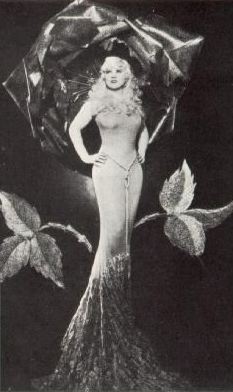
Mae West – The Rose Background
Belle of the Nineties. 1934. Mae West photo Album. Consulted on November 23, 2008.
http://www.mae-west.org/old/mw_photos/mw_bell2.JPG

Mrs. Coulter – Golden Monkey
The Golden Compass. 2007. The Costumer’s Guide to Movie Costumes. Consulted on November 23, 2008.
http://i68.photobucket.com/albums/i31/costumersguide/The%20Golden%20Compass/screenshots/coulter/coulter%20gold%20strapless/GC_GrvBnnr_Coulter.jpg

16. 1939-1945 WWII

The Ideal German Soldier
RIGG, Bryan Mark. Hitler's Jewish Soldiers:The Untold Story of Nazi Racial Laws and Men of Jewish Descent in the German Military, University Press of Kansas, May 2002. 528 pages. Adelaide Institute. Consulted on November 23, 2008.
http://www.adelaideinstitute.org/Racecard/Hitler

Darth Vader
Star Wars: Episode 4 – A New Hope. 1977. Sith Sigma. Consulted on November 23, 2008.
http://sithsigma.files.wordpress.com/2007/06/darthvader.jpg

17. 1948-1956 The New Look - Dior

Bar Suit
DIOR, Christian. The New Look Collection. 1947. BBC. Consulted on November 23, 2008.
http://www.bbc.co.uk/radio4/womanshour/gallery/media/Dior-New-Look.jpg

Shmi Skywalker
Star Wars: Episode I - The Phantom Menace. 1999. The Padawan’s Guide to Movie Costumes. Consulted on November 23, 2008.
http://www.padawansguide.com/othercharacters1.shtml

18. 1957-1966 Swinging London / Pop Art

Swinging Sixties
BREWARD, Christopher, David GILBERT and Jenny LISTER. Swinging Sixties. V & A Publications. May 2006. 128 pages. Amazon.co.uk. Consulted on November 23, 2008.
http://www.amazon.co.uk/Swinging-Sixties-Christopher-Breward/dp/185177484X

Lady Jocelyn
A Knight’S Tale. 2001. The Costumer’s Guide to Movie Costumes. Consulted on November 23, 2008.
http://s68.photobucket.com/albums/i31/costumersguide/A%20Knights%20Tale/?action=view¤t=promo08.jpg

19. 1967-1975 Extreme Transition

United Airlines Stewardess, 1968
LOVEGROVE, Keith. Airline. Laurence King. October 2000. 144 pages. Amazon.ca. Consulted on November 23, 2008.
http://www.amazon.ca/Airline-Keith-Lovegrove/dp/1856692051/ref=sr_1_1?ie=UTF8&s=books&qid=1223137029&sr=8-1

Stewardess
The Fifth Element. 1997. Elfmoogle's Screencap Gallery. Consulted on November 23, 2008.
http://www.elfmoogle.net/gallery/displayimage.php?pid=12867&fullsize=1

20. 1976-1989 Roller Coaster of Styles

Joan Collins in Dynasty
Dynasty. 1981. The Fashion Police. Consulted on November 23, 2008.
http://www.thefashionpolice.net/2007/09/fashion-crime-1.html

Lady Jessica
Dune. 1984. Flickr Photo Gallery. Consulted on November 23, 2008.
http://flickr.com/photos/23972402@N00/2682033354

There. Of course, some pairs are better than others, but I swear, this work is harder than it looks. Also, I know that some of the links no longer work, but that is why I gave you the date I consulted them on originally.

Guess what my grade was for these two papers (yes, it was two with ten eras each)? 100% of course. For those interested, the image that was my inspiration for this whole paper was Darth Vader and the German Soldier.

Now I'm pretty much done sharing my school papers with you. from now on, I will have to write only new stuff. I should be okay though, as this is what I have been doing since July.